I’m looking for a good way to store electrical power on the homestead, so I followed a tutorial online and created my own small Edison Battery.
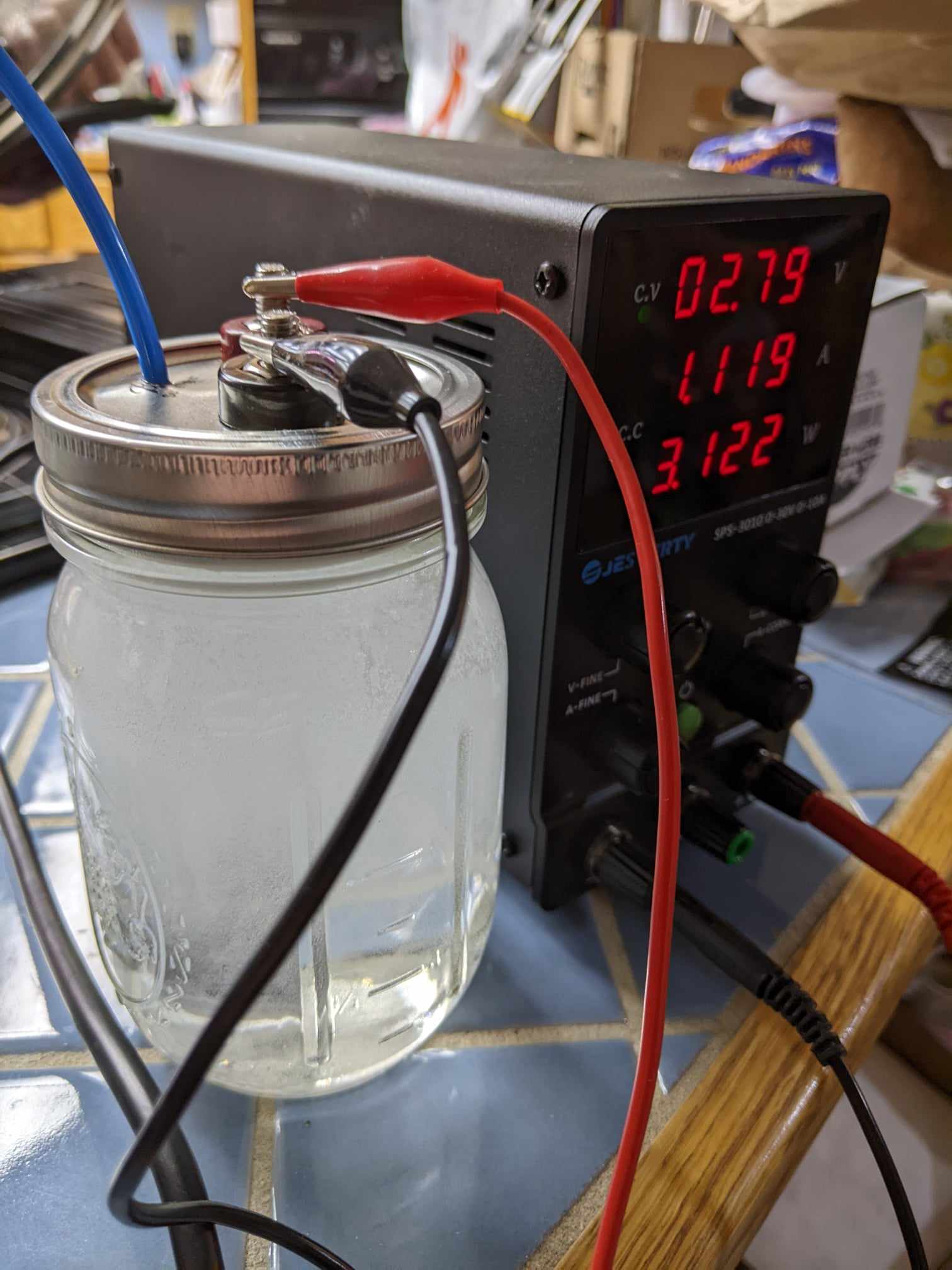
Back when electric cars were first invented Thomas Edison created a battery from nickel and iron plates submerged in a solution of potassium hydroxide.
So why is this significant?
It turns out these could be a better solution for solar and wind-powered battery banks than the current lithium batteries being used. According to some of the sources I’ve been reading/watching, they last for a very very long time and some of the original Edison batteries have been cleaned, reconditioned, and put back into use.
While these batteries didn’t have the storage density of a lead acid battery (which is needed for vehicles), it turns out they can handle the rapid discharge and deep cycle recharging that would be conducive with an off grid solar/wind turbine system.
They also substitute a solution of potassium hydroxide, instead of acid. This means the parts don’t corrode nearly as fast. Potassium hydroxide is abundant as it is the same compound used for making liquid soap. It is lye that is derived from soaking wood ashes in water.
So what have I discovered from my own experiments/tests?
The test cell is able to take a charge from my power supply.
The downside is that it doesn’t seem to keep that charge for very long.
I have several variables in this test. These variables include the size of the nickel and iron plates, the space between the nickel and iron plates, how much potassium hydroxide has been added to the water, and the minerals that could be present in the rain water used for the experiment.
If you have any ideas on how to improve the design I’d love to hear them.
Researching all of this stuff on my own is exhausting.
This is the tutorial I used to build my battery. https://youtu.be/K84PywMwjZg?si=dYtIGncl2ZCzr9gc&t=55
 Sustainable Craig